 What Is Your Organisation For?

What Is Your Organisation For?
A Social Impact Leader’s Guide to Locking in Purpose, Broadening Financial Participation, and Expanding Decision-Making Power
Mark Hand and Tiffany VargasSkoll Centre for Social Entrepreneurship
- What is your organisation for?
- Who should benefit from the value it creates?
- Who should have a say in its direction?
Answering these questions is critical for social impact leaders and their senior teams. By carefully embedding purpose, expanding decision-making power, and broadening financial participation, leaders can design and structure organisations to support the external impact they seek and benefit those in the organisation who create that impact.
This guide is to help you design for shared purpose, power, and profit.
You will learn to:
To help you along this journey, the report includes:
- Three ladders that show how organisations lock in purpose, expand decision-making power, and broaden financial participation
- Eight organisational models that achieve these goals to varying degrees
- Two diagnostic quizzes to determine your organisation’s current commitments and future goals
- Suggested next steps for leaders to shift their mindset and their organisation’s culture, policies, and structure
- Resources for business owners, field-builders, funders, policymakers, and academics
The Trouble With Talking About Purpose, Power, and Profit Sharing
For social impact leaders interested in aligning their ownership structure with their mission, this can be a confusing, jargon-heavy space. This guide cuts through the noise.
Shared ownership structures – such as B Corps, evergreen companies, employee stock ownership plans (ESOPs), and worker cooperatives – all promise to operate differently than hierarchically managed, shareholder value-maximising, investor-owned firms. This guide puts various options side by side so you can gauge suitability and trade-offs without hiring a consultant to translate for you. You can then decide for yourself whether and how to lock in your organisation’s purpose, expand participation in decision-making, and/or broaden profit and equity sharing with your employees and other stakeholders.

What You’ll Find In This Guide
In the next two sections, we define our three dimensions and the eight organisational archetypes they generate. You can also skip ahead to our two diagnostic quizzes, or the moves your organisation can make to lock in purpose, share power, and broaden financial participation.
A few things to keep in mind:
- While many of the examples in this report come from for-profit companies, the framework can also apply more broadly to mission-driven organisations such as cooperatives. Nonprofits that have already legally locked in their purpose, for example, can still explore how and whether to broaden power and participation in the value created by the firm – even if they can’t give equity to employees. Impact investors can consider their own position on each dimension in addition to identifying what they expect out of the investments in their portfolio.
- This framework is descriptive, not prescriptive. Each model brings its own benefits and challenges, and the role of an organisation is to find a point of alignment among purpose, power, and participation in value created. Our prescription is that we want more organisations to make explicit decisions about purpose, power, and financial participation. But we designed this guide to help leaders diagnose where their organisation stands on the dimensions below and identify what they want their organisation to become.
- Throughout the report, we use real companies as examples. We do not make global judgments about each company, or hold them up as uniformly following a best practice, but rather highlight particular features of each. We worked to be accurate and fair; still, the point of each case is to ground key concepts.
Purpose, Power, and Participation: Definitions and Dimensions
We use three questions to help leaders make intentional ownership decisions. Answering these questions can help an organisation align its relationships with stakeholders, address its externalities, more equitably distribute the value it creates, and deepen its impact.
Purpose lock-in:
How, if at all, does your organisation commit itself to a purpose beyond profit maximisation?
Decision-making power:
Whose voice and vote shape how decisions are made?
Financial participation:
How, if at all, does the organisation’s financial success get shared with workers and other stakeholders?
What we see by looking at these dimensions is that an organisation can use each axis as a way to adjust its relationships with its stakeholders, address its negative externalities, and more equitably distribute the value it creates.
Go deeper:
See a timeline of the histories of purpose lock-in and shared ownership of decision-making power and financial returns.
The Ladder of Purpose Lock-In
How does your organisation commit itself to a purpose beyond profit maximisation?
Each step up the ladder below makes it harder to drift away from or alter an organisation’s purpose:
Harder to change ↑
- 1Shareholder primacyMost US public companies
- 2Aspirational purposeReliance Industries · Big Bold Health
- 3Internal policiesUnilever · Salesforce
- 4Board-level responsibilityTesco · Mars
- 5Legal purpose lockCoursera · Fairbnb · Dr. Bronner’s
- 6Asset lockPatagonia · Novo Nordisk · Library of Things
↓ Easier to change
- 1
Shareholder primacy
Profit is the only duty. Due to a series of court rulings in the US, most publicly traded companies view themselves as legally required to maximise shareholder value, and only shareholder value.
- 2
Aspirational purpose
Purpose is expressed in values statements and speeches. Reliance Industries’ stated purpose is long-term shareholder value creation, though they also claim to be ‘building valuable assets for India and innovating for a better future for all Indians’. Big Bold Health’s purpose is to ‘harness nature’s most potent elements from soil and sea to rejuvenate and rebuild your wellness, cell by cell’.
- 3
Internal policies
Purpose is codified in handbooks, KPIs, impact metrics, and performance reviews. Though dialled back in 2024, Unilever’s sustainability plans were integrated into its strategy and made up part of its Performance Share Plan. Salesforce’s commitment of 1% of its equity, 1% of its product, and 1% of employee time to philanthropy is codified internal policy.
- 4
Board-level responsibility
Directors, owners, and investors weigh purpose alongside profit in major decisions. Tesco directors must consider the long-term effects of the company’s decisions on its employees, communities, the environment, and other stakeholders. Mars is a privately held business that operates what it calls ‘a mutuality of services and benefits among consumers, distributors, competitors, suppliers, government, employees, and shareholders’.
- 5
Legal purpose lock
Purpose is built into bylaws, corporate form, trust deeds, or investment terms, with formal oversight or enforcement. Coursera is legally structured as a benefit corporation with the mission to ‘create a material positive impact on society and the environment’. Fairbnb’s board governs the platform’s allocation of a share of profits to local community projects. Dr. Bronner’s is a benefit corporation with enforceable social and ecological commitments.
- 6
Asset lock
Assets are permanently dedicated to purpose (e.g., purpose trust or foundation ownership). Patagonia’s voting stock is held by the Patagonia Purpose Trust, with non-voting stock held by the Holdfast Collective for environmental causes. Novo Nordisk is controlled by a foundation that reinvests dividends into medical and social impact research. Library of Things has a mission lock with a guardian share held by a local nonprofit that must consent to any exit or significant asset sale that could conflict with its mission.
The Ladder of Decision-Making Power
Who are the decision makers in an organisation? At each rung of the ladder, more stakeholders have more influence and power.
Sharing decision-making power often starts with employees, but companies have many stakeholders (e.g. suppliers, local communities, the environment) who could participate in decision-making.
Harder to change ↑
- 1Owners or founders decideMeta · Huawei
- 2Consultative voiceGoogle · Microsoft · Starbucks
- 3Representative voiceMarks & Spencer · Translink
- 4Board-level shared governanceBMW · King Arthur Baking
- 5Stakeholder majorityEqual Exchange · John Lewis Partnership
- 6Multi-stakeholder democracyChamplain Housing Trust · Organically Grown Company
↓ Easier to change
- 1
Owners or founders decide
Decision-making is highly centralised, without structured input from other stakeholders. For example, Meta’s dual-class share structure concentrates voting control with CEO Mark Zuckerberg. Huawei Technologies has ‘nominal employee ownership’ through a trade union trust; however, strategic decisions are made by an executive committee and founder Ren Zhengfei.
- 2
Consultative voice
Surveys, listening sessions, and idea forums gather feedback from and share information with some stakeholders. Google runs an annual ‘Googlegeist’ employee survey to collect input on leadership, strategy, and more. Microsoft administers a quarterly ‘Employee Signals’ survey, and managers publicly share actions taken in response. Starbucks runs ‘Partner Voice’ sessions to collect feedback from baristas on operations and culture without decision-making authority.
- 3
Representative voice
Stakeholder councils, unions, and working groups have consultative rights. Marks & Spencer‘s (M&S) Business Involvement Group (BIG) is an elected, national forum representing 72,000 employees that M&S informs, involves, and consults. Translink established a management forum representing various departments that meet regularly with union and management representatives.
- 4
Board-level shared governance
Co-determination, consent-based processes, or board seats for employees or other stakeholders. BMW has a Supervisory Board composed of 10 shareholders and 10 employee representatives, an example of German-style codetermination. King Arthur Baking is 100% employee-owned and a majority of its ESOP trustees are employees; the board of directors retains most strategic control.
- 5
Stakeholder majority
Employees and other stakeholders hold decisive voting power. Equal Exchange is a worker cooperative in which each worker gets one equal vote, and worker-owners elect the board. At the John Lewis Partnership, changing the constitution requires the consent of its Partnership Council, a group of 60 peer-elected employees.
- 6
Multi-stakeholder democracy
Employees and other stakeholders – e.g. buyers, suppliers, communities, nature – make major decisions democratically. Champlain Housing Trust is a community land trust in the US whose elected board is one-third residents, one-third general members, and one-third public members. Organically Grown Company’s Trust Protector Committee is made up of representatives from each of its key stakeholder groups: employees, growers, customers, investors, and community.
The Ladder of Financial Participation
Each level shifts toward broad, structurally reinforced financial participation.
Typically, that starts with employees – but in consumer cooperatives like REI, profit-sharing begins with consumers. Other companies make donations to social or environmental causes.
Harder to change ↑
- 1Shareholders are entitled to all profitsMcDonald’s · Walmart
- 2Discretionary payoutsApple · Kum & Go
- 3Formula-based profit sharingSouthwest Airlines · Optimax
- 4Deferred or equity-like plansIngersoll Rand
- 5Broad equity or trust-based profit sharingWinCo Foods · Publix
- 6Full residual sharing or wage lockMondragón · WeTell
↓ Easier to change
- 1
Shareholders are entitled to all profits
No sharing of profits or equity with other stakeholders. For example, Walmart phased out its quarterly ‘MyShare’ bonuses and rolled them into base pay. McDonald’s SEC filings show discontinued company profit sharing and ESOP contributions as of 2004. Today frontline compensation is primarily wages and standard benefits, not a profit share.
- 2
Discretionary payouts
One-off or management-determined bonuses or donations to local organisations. Apple offers one-time cash bonuses to retail staff, awarded at company discretion. When it was acquired, Kum & Go awarded ‘thank you bonuses’ to over 5,000 employees based on seniority and individual contributions.
- 3
Formula-based profit sharing
Clear, predictable sharing of profits, but no ownership. Southwest Airlines maintains a longstanding profit sharing formula, part to retirement, part in cash. Before it became a purpose trust, Optimax set aside 25% of pre-tax profits to be distributed transparently among its employees every quarter.
- 4
Deferred or equity-like plans
Phantom equity, Restricted Stock Units (RSUs), or other vehicles tied to company value. Ingersoll Rand grants RSUs to all employees after one year of service under its Ownership Works equity program.
- 5
Broad equity or trust-based profit sharing
Broad-based ESOPs, options, or trust-enforced profit sharing. WinCo Foods is majority ESOP-owned, with broad participation across the workforce. Publix operates an ESOP called the PROFIT PLAN, where eligible associates receive company stock at no cost.
- 6
Full residual sharing or wage lock
Cooperative patronage or living wage lock. Mondragón worker co-ops distribute surplus to worker-members by formula (patronage) via internal capital accounts. WeTell established that no one could earn more than five times the lowest-paid employee, and their steward-ownership structure locks in assets to the benefit of employees rather than investors.
Models of Purpose Lock-In, Power Sharing, and Profit Sharing
Simplifying these dimensions by splitting them into ‘low’ and ‘high’ produces eight organisational models.
The models are based on whether they have low or high levels of purpose lock-in, shared decision-making power, and shared financial participation. This is an intentional simplification. The six-level scales above help us understand each dimension; collapsing to high/low lets us identify common organisational models and their trade-offs. Each brings its own potential benefits and challenges. Talking about them relative to each other makes visible the potential characteristics and trade-offs of each.1
A filled dot means high; an open ring means low. Every model is one combination of the three.
1 We stress potential here because many of these potential benefits and challenges have yet to be studied.
1. Shareholder Value-Maximising Firms
- Low purpose lock-in
- Low decision-making power
- Low financial participation (narrow)
Purpose is flexible and market-led; decisions are top-down; equity and profits are retained by owners.
Benefits: Clear lines of authority, easily identifiable accountability, speedy decision-making, strategic flexibility, access to conventional capital, and few barriers to growth or a sale. For workers, compensation is straightforward.
Challenges: Dependence on monitoring and enforcement; less frontline innovation, responsibility-taking, and retention; more permission-seeking; turnover, and risk of adversarial labour relations; in public companies, short-termism among executives and managers and reduced credibility with stakeholders; power struggles get driven underground, expressing themselves informally and outside leadership’s control; greater difficulty building employee loyalty. For workers, few protections against bad managers; less incentive to share ideas; reduced autonomy, dignity, and rights; psychological disconnection; and little wealth-building.
Examples:
ExxonMobil (US): Publicly traded multinational that prioritises shareholder returns and profit growth as its corporate purpose. Decision-making authority rests with senior executives and a shareholder-elected board (no formal worker participation or purpose lock-in).
Reliance Industries (India): A family-owned conglomerate with a centralised leadership structure under Mukesh Ambani. Its stated goal is long-term shareholder value creation, with strategic decisions concentrated among top executives without employee or community input.

2. Classic Profit- and Equity-Sharing Firms
- Low purpose lock-in
- Low decision-making power
- High financial participation (broad)
Purpose is flexible and market-led; decisions are top-down; equity and/or profits are shared broadly.
Benefits: Higher productivity and performance, more cooperation and information sharing, lower turnover, higher firm survival rates, greater manager-worker alignment, and a stronger ‘ownership culture’ (all conditional on complementary practices). For workers, higher pay/wealth, greater employment stability, and increased scrutiny of management.
Challenges: Free-rider problems, administrative complexity, compliance costs, cash-flow strain from debt/repurchase obligations, capital constraints, increased scrutiny of management, and ongoing but more diffuse short-termism. For workers, unpredictability about future earnings and over-exposure to one firm (in equity-sharing arrangements).
Examples:
Southwest Airlines (US): Maintains a strong employee profit-sharing tradition dating back to the 1970s, allocating roughly 10% of pre-tax income to staff each year. Strategic decisions remain executive-driven and the company’s purpose (‘low cost, friendly air travel’) adapts with markets.
Publix (US): One of the largest employee-owned grocers in the US, offering broad shared ownership through an internal ESOP and profit-sharing bonuses, yet all major governance authority remains with executives.
Toyota (Japan): Each spring Toyota negotiates semi-annual performance bonuses with its labour unions (‘shuntō’ outcomes) that broadly share upside without shifting governance power.
Apis & Heritage Capital Partners: See the case study below

Apis & Heritage Capital Partners: A Classic Equity-Sharing Firm Model 2
- Low purpose lock-in
- Low decision-making power
- High financial participation (broad)
Apis & Heritage Capital Partners (A&H) is a mission-driven investment firm that finances employee-led buyouts (ELBOs) to convert privately held companies into 100% employee-owned businesses. A&H closed its first fund for USD 58 million in 2021 and is in the process of raising its second fund, projected to be over USD 200 million. To date it has helped transition six firms in industries like landscaping, construction, and cleaning services to employee ownership, and created more than 1600 new employee-owners – especially among low- and moderate-income workers and workforces of colour – while attracting increasing investor support to scale its impact.
At the portfolio company level, financial participation serves as a lever to elicit worker voice, improve job quality, and increase transparency and information-sharing.
The firm is partnered with a nonprofit organisation using philanthropic funding to do robust capacity-building and culture change. This work to build a more participatory ownership culture in acquired companies can be challenging given high turnover among low-wage and seasonal workers.
Two areas of ongoing complexity for A&H are structuring ELBOs that align fair compensation for selling owners, financial returns for investors, and wealth building opportunities for employees; and balancing building long-term assets for employees with offering good jobs today.
3. Shareholder Value-Maximising, Participatory Firms
- Low purpose lock-in
- High decision-making power
- Low financial participation
Purpose is flexible and market-led; decision-making is shared; equity and profits are retained by owners.
Benefits: Fewer bureaucratic bottlenecks, reduced permission-seeking, faster communication flows, greater flexibility, more responsibility-taking, and increased innovation. For workers, better job quality, more rights and protection against bad managers, autonomy, and alternative pathways to leadership.
Challenges: Slower decision-making, diffuse accountability, strategic complexity, avoidance of difficult or mundane tasks, and growth-constraining conservatism. For workers, role confusion, high cognitive load, a heavy training burden, and risk of tyranny by either a minority or the majority.
Examples:
Morning Star (US): Radical self-management (‘no bosses’) with strong local autonomy and peer agreements; ownership is concentrated and profits stay with owners.
Valve (US): Independent game developer and digital distribution company known for its holocracy-inspired flat management structure, in which employees choose their own projects and peers evaluate performance. Ownership remains leadership-led, and most financial rewards come via discretionary bonuses.
4. Participatory, Profit-Driven Firms
- Low purpose lock-in
- High decision-making power
- High financial participation
Purpose is flexible and market-led; decision-making is shared; equity and/or profits are shared broadly.
Benefits: Performance and profitability gains, lower turnover, and more innovation depend on expanding voice; recombination of return and control rights means workers have both motive and means to improve operations as owners.
Challenges: Slower democratic decision-making cutting into profitability; cash-sensitive workers may resist reinvestment or growth strategies; in periods of high stress, democratic deliberation breaks down; the first cohort of workers’ financial incentives are misaligned with new workers’ around dilution, risk tolerance, or exit timing.
Examples:
SRC Holdings (US): Operates on the open-book management model it pioneered, where every employee learns to read financials and share in profits. Decision-making is participatory at team level, while purpose remains performance driven rather than legally fixed.
Semco Partners (Brazil): Famous for participatory management and profit-sharing; employees help set pay and policies.
ULCCS and AMUL (India): ULCCS is a century-old worker cooperative in Kerala; worker-owners govern and share surpluses while competing in mainstream construction markets. AMUL is a dairy federation distributing profits to member-farmers by formula (patronage), under democratic cooperative governance.
SEWA: See the case study below
Self-Employed Women’s Association (SEWA): A Participatory, Profit-Driven Firm Model 4
- Low purpose lock-in
- High decision-making power
- High financial participation
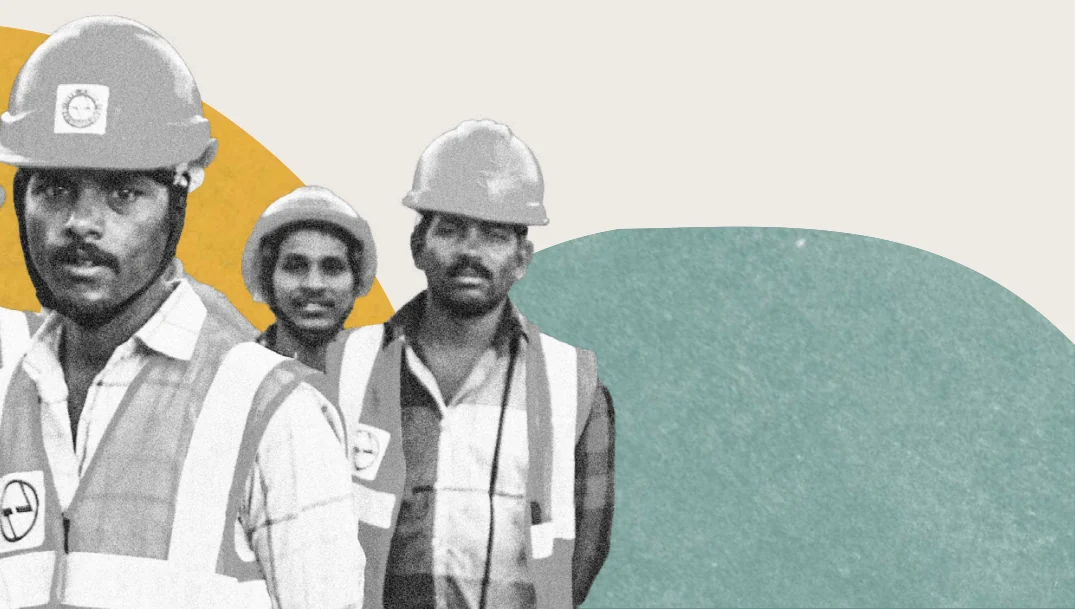
Founded in 1972 in India, the Self-Employed Women’s Association is a movement that started as a trade union of women working in the informal economy and grew into a network of women-led institutions across sectors such as agriculture, dairy, handicrafts, services, and finance. SEWA’s mission centres on self-reliance and full employment, combining labour organising with income generation via cooperatives, producer companies, financial services, and capacity building. SEWA Bharat, which is the national federation of SEWA, supports a network of member-owned cooperatives and other enterprises that expand women’s economic security, voice, and collective ownership in contexts where formal employment protections are largely absent.
SEWA’s experience highlights the complexity of translating broad participation into predictable financial security, and sharing rewards with marginalised communities without offloading risk.
While members formally own and govern most enterprises, market volatility, limited access to capital, and social marginalisation can constrain growth; if they do grow, the necessary professionalisation of management can undercut worker power. Some cooperatives also have to work to balance the benefits generated for their workers and for their customers.
The organisation illustrates how strong mutual commitment and participatory governance can help balance the tensions between employee empowerment and economic precarity.
5. Purpose-Protecting Firms
- High purpose lock-in
- Low decision-making power
- Low financial participation
Purpose is locked in; decisions are top-down; equity and profits are retained by the organisation.
Benefits: Protection of purpose through ownership transitions, reduced pressure to sell to the highest bidder or maximise short-term returns, operations more closely aligned with founding aims, increased independence, and more credibility with stakeholders. For workers, greater long-term security and clarity of purpose.
Challenges: Constrained ability to adapt to market shifts, questions around enforcement, managerial entrenchment, purpose-washing of difficult decisions, and capital constraints. For workers, an inability to alter the purposes of the trust.
Examples:
Newman’s Own (US): 100% of profits to charity through ownership by the foundation, which appoints and can remove members of the board of the company.
Patagonia (US): Voting stock is held by the Patagonia Purpose Trust (2% of shares), with non-voting stock (98%) held by the Holdfast Collective, which ensures mission focus. Viewed another way, the earth has full financial participation.
Ecosia (Germany): By transitioning to steward ownership, founders gave up the right to sell or take profits; 100% of profits dedicated to climate action, with governance set up to protect that mission in perpetuity.

6. Purposeful, Profit-Sharing Firms
- High purpose lock-in
- Low decision-making power
- High financial participation
Purpose is locked in; decisions are top-down; equity and/or profits are shared broadly.
Benefits: Clarifies and orders the purposes of the business, while sharing some of the financial gains; selects and recruits workers for dedication to the purpose; ensures ongoing employee benefit after a sale, along with the purpose; offers resistance to pressure to sell, from employees or an ESOP trust; enables financial participation without requiring a full overhaul of organisational design.
Challenges: Entrenches, rather than resolves, tension among multiple organisational goals; workers unable to advocate for their own benefit, leaving them vulnerable to managerial purpose-washing without the power to push back.
Examples:
King Arthur Baking (US): 100% employee-owned via ESOP, B Corp certified, and a legal mission lock via its benefit corporation status. Governance remains leadership-led.
Dr. Bronner’s (US): A benefit corporation that also shares upside broadly via a company-wide retirement/profit-sharing plan and bonuses; governance remains leadership-led.
Coursera (US): A benefit corporation with broad-based employee equity (ESPP/RSUs); decision rights stay with conventional management/board.
7. Purpose-Driven, Participatory Organisations
- High purpose lock-in
- High decision-making power
- Low financial participation
Purpose is locked in; decision-making is shared; equity and profits are retained by the organisation.
Benefits: Decouples returns and control; establishes both procedural and substantive legitimacy; trains workers in long-term thinking; clear purpose reduces some democratic governance pitfalls; aligns most stakeholders around a central purpose. For workers, it means control plus security.
Challenges: Limited individual cash upside; complex governance; dual constraints on the organisation’s adaptability from purpose lock and slower decision-making.
Examples:
Carl Zeiss / SCHOTT (Germany): Both governed by the Carl Zeiss Foundation statute. Mission locked; German codetermination yields strong worker voice; profits reinvested or donated to a trust that supports local technical education.
Ngāi Tahu Holdings (New Zealand): Iwi-owned under trust deed; elected assembly governance; profits largely reinvested or distributed to tribal purposes.
The Co-operative Group (UK): A large consumer co-op whose Members’ Council acts as guardian of the co-op’s purpose and values; the board includes member-nominated directors; profits can be distributed as member dividends or donated to support local food programs and growers.
8. All-Stakeholder Firms
- High purpose lock-in
- High decision-making power
- High financial participation
Purpose is locked; decision-making is shared; profits/equity are broadly shared.
Benefits: Full alignment of purpose, decision-making, and financial benefit; workers know they will benefit alongside the purpose, rather than external investors; succession uncertainty reduced.
Challenges: Overlapping complexity from the constraints of purpose, slower democratic decision-making, and generating a shareable surplus; multi-layered capital constraints; factions of workers financially incentivised to purpose-wash hard decisions.
Examples:
WeTell (Germany): Steward-owned mobile provider with a cap on the ratio of executive to frontline worker pay, and board representation.
Organically Grown Company (US): Perpetual purpose trust-owned, and a multi-stakeholder Trust Protector Committee appoints the board and guards mission; profit distribution is explicitly designed to balance stakeholders.
Scott Bader (UK): A ‘common ownership’ trust with mission lock and democratic structures; dividend-like payments equally from consolidated net profit.
Riverford Organic Farmers: See the case study below

Riverford Organic Farmers: An All-Stakeholder Firm Model 8
- High purpose lock-in
- High decision-making power
- High financial participation
Riverford Organic Farmers began as a small organic farm in the UK and grew into a national veg box business. In 2018, founder Guy Singh-Watson transferred ownership to an Employee Ownership Trust, making Riverford fully employee-owned. The shift was designed to avoid the business being sold, protect Riverford’s values and purpose for the long term, and create a fairer way to reward the people who work in it.
Riverford’s purpose is to grow a better future for people and the planet through good farming, good food, and good business. Employee ownership reinforces that purpose by aligning how Riverford makes decisions, shares success, and maintains what they stand for. Since becoming employee-owned, Riverford has seen profits increase, even as they work to embed the governance and cultural changes needed to bring employee ownership to life in practice.
Riverford describes its governance as a three-legged stool: the Board runs the business day to day; the Trust protects its purpose and long-term independence on behalf of all employee-owners; and the Co-owner Council challenges leadership, brings employee perspective, and helps influence priorities – particularly where Riverford invests for the future.
‘Riverford’s purpose is to grow a better future for people and the planet through good farming, good food, and good business.’Riverford Executive Charlotte Tickle
The biggest challenge hasn’t been the legal transition, but making employee ownership real: ensuring everyone understands Riverford’s purpose and values, and shaping a culture that reflects an employee-owned business. That has meant supporting managers and leaders to embrace co-ownership – sharing information, inviting challenge, and creating genuine opportunities for participation, so that ownership is felt in how they work day to day.
Quiz 1: Taking Stock of Your Organisation Today
This short quiz can help you identify where your organisation stands today: how firmly your purpose is embedded, how power is distributed, and how broadly financial benefits are shared.
Once you finish, you’ll have the option to learn more about where you are, or to take another quiz that will help you figure out where to head next.

Quiz #1: Taking Stock of Your Organisation Today
Choose the statement that best describes your organisation; select that number. There are no wrong answers!
Where you stand
For each ladder, we tally your responses to the questions in Quiz 1 and match your results to the models described below.
| The three numbers you selected | Added together and divided by three | 1–3 is ‘low’ 4–6 is ‘high’ |
|---|
Who and what is your organisation for?
A filled dot means high; an open ring means low. Tap any model to read about it.
Quiz 2: Determining Where You Want to Go
Now you know where you stand today; where do you want to take your organisation next?
Each question below asks you to choose between two values-based statements. Which matters more to you right now?

Quiz 2: Determining Where You Want to Go
There are no wrong answers, only trade-offs. The goal is to surface what is most important to you.
Taking stock
Identifying which dimension you prioritise when faced with a trade-off.
We tally the number of times you chose each letter; the highest number suggests what you want to prioritise changing.
What next?
Identifying which of the eight models you want to become, and how.
Compare this with your Quiz 1 results to see how your aspirations align with your organisation today; below, we’ll give you examples of companies that have made moves in the same direction.
Your answers stay in this browser on this device. Nothing is sent anywhere.
Moves You Can Make
Organisational change can begin in many ways, including with shifts in how leaders and their senior teams think about the organisation; organisational norms and habits, organisational policies; and legal foundations.
Mindset shifts
When leaders learn about open book management, engage a leadership coach to identify their purpose, or commit themselves as an individual to a goal, we call these mindset shifts.
Culture shifts
When that change starts to radiate through the organisation through new meeting rituals, sharing financial statements with employees, or active encouragement of innovation at all levels of the company, we call these culture shifts.
Policy shifts
When organisations formalise these mindset and culture shifts into written policies, standing committees, repeatable processes, or codified profit-sharing formulas, this can facilitate deeper policy shifts.
Structure shifts
Finally, organisations can also lock in purpose or broaden participation formally by changing its governance and ownership, including through their bylaws, board composition, corporate status, or a chartered employee council. We call these structure shifts.
The four shifts build on each other: Mindset shifts can cause organisations to build new culture and policies. Shifts in structure can shape an organisation’s culture and mindset.
In the following sections, we show how each type of shift can be used to help organisations move up the ladder for each dimension:
Moves You Can Make:
Locking in purpose
Mindset
SEWA founder Ela Bhatt gave her cooperative a single goal: establishing self-reliance for self-empowered women in India. Zingerman’s founders wrote out a long-term vision committing them to a community of distinct businesses rather than franchises; three decades later, that became a part of the company’s perpetual purpose trust.
Culture
At W.L. Gore managers are expected to align their proposals with the purpose of the enterprise.
Policy
Novo Nordisk incorporates its sustainability-focused Strategic Aspirations into individual and corporate performance targets. Mahindra & Mahindra’s performance payout scorecards include its sustainability parameters.
Structure
Dr. Bronner’s became a benefit corporation with enforceable social and ecological commitments. Patagonia founder Yvon Chouinard gave the company to a perpetual purpose trust to ‘save our home planet’. As a French société à mission, Danone’s bylaws require it to monitor progress against its social and environmental objectives.
Moves You Can Make:
Expanding decision-making power
Mindset
New Belgium Brewing’s CEO read The Great Game of Business to learn about open-book management, full financial and business transparency within the company. Data Driven Detroit learned how to manage more democratically from the School for Democratic Management.
Culture
SRC Holdings operates open-book huddles to build ownership behaviours. At John Lewis Partnership, a weekly in-house magazine informs employees (‘Partners’) and accepts Partner letters on any subject, from enquiries to criticisms.
Policy
Toyota’s famed kaizen flows from its Creative Idea Suggestion System. At BuurtzorgT, a Dutch mental health provider, decentralised teams of providers function with autonomy in the self-managed organisation.
Structure
At ULCCS, workers elect its board of directors at an annual general meeting. Half of Volkswagen’s Supervisory Board are either employees or trade union representatives elected by their peers, in line with German rules on codetermination. Smallholder tea factories in Kenya elect industry-wide Directors, monitored by the country’s Independent Electoral and Boundaries Commission.
Moves You Can Make:
Broadening financial participation
Mindset
KKR’s Pete Stavros studied employee ownership in business school, which led to his championing equity-like grants across KKR’s portfolio.
Culture
Namaste Solar included employees in its exploration of different mechanisms for sharing profits and equity with employees. WeTell made its salaries transparent, then set up an organisation-wide team to determine more equitable compensation across the company.
Policy
Optimax set aside 25% of pre-tax profits to be distributed quarterly among its employees. King Arthur Baking raised its minimum wage floor.
Structure
In their transition to steward ownership, WeTell established that no one could earn more than five times the lowest-paid employee. At King Arthur Baking, employees can add an additional 25% to their paycheques (on average) through the company’s employee stock ownership plan (ESOP).
Resources for Owners, Funders, Field-Builders, Policymakers, and Researchers
Around the world, many organisations advocate for the expansion of purpose lock-in, power-sharing, and financial participation.

For owners
For more on locking in purpose, look for companies in your geography or industry that are certified B Corporations, Purpose Pledge members, steward-owned companies, purpose trust-owned companies, or 100% for Purpose members.
For more on broadening decision-making power, look at the practices of worker cooperatives, including through resources from the Democracy at Work Institute, the US Federation of Worker Cooperatives, the International Cooperative Alliance, and Co-operatives UK. To learn more about codetermination, see the Hans Böckler Foundation (Germany).
For more on expanding financial participation, take a look at resources from the National Center for Employee Ownership (US), the Employee Ownership Association (UK), the European Federation of Employee Share Ownership, Associação Nacional de Programas de Participação nos Lucros e Resultados (Brazil), and the South African Employee Ownership Association.
For funders
In the US, Gary Community Ventures organises Assemble100, a conference on ownership investing, which Transform Finance, the Ownership Capital Lab, and Unlock Ownership all promote. The Innovative Finance Initiative and The ImPact work to transform finance more broadly. Groups like EDGE Funders Alliance and Fundaction (EU) organise and promote participatory and other radical grantmaking strategies.
For field-builders
The Wellbeing Economy Alliance is a global network of like-minded organisations. The Intercontinental Network for the Promotion of Social Solidarity Economy and the United Nations Inter-Agency Task Force on Social and Solidarity Economy support shared ownership globally. The International Cooperative Alliance and the Democracy at Work Institute both support the development of worker cooperatives. Purpose Foundation (Germany) and the Purpose Trust Ownership Network (US) promote steward ownership and trust-based ownership. The National Center for Employee Ownership (in the US) and the Employee Ownership Association (in the UK) promote employee ownership. the Rutgers Institute offers executive fellowships to field-builders, and partners with the Aspen Institute’s Economic Opportunities Program on an annual Employee Ownership Ideas Forum, and the Economy of Francesco works within religious networks.
For policymakers
In the US, the National Center for Employee Ownership and Project Equity maintain databases of employee ownership policies; The ESOP Association and Expanding ESOPs are the largest employee ownership lobbying groups. Globally, the International Labor organisation’s Cooperative Unit advocates for worker cooperative policy, as do many of the field-building organisations listed above.
For academics
In the US, the Rutgers Institute for the Study of Employee Ownership and Profit Sharing hosts conferences, offers academic fellowships, and leads the University Consortium on Employee Share Ownership. Mondragón University trains students in the management of worker cooperatives. The EMES Network researches social innovation and the solidarity economy globally, and the B Academics researches B Corporations. Purpose Foundation organises research on steward ownership. Doughnut Economics Action Lab promotes post-growth economics, and the Institute for Economic Democracy promotes worker participation globally. Purpose Economy operates a Research Hub on steward ownership, and helped build the Germany-based Steward Ownership Network. The Skoll Centre partners with the Kellogg College Centre on Mutual and Co-owned Business.
Acknowledgments
The Skoll Centre, led by Professor Marya Besharov and based at Saïd Business School, University of Oxford, is a global hub for social entrepreneurship, innovation, and impact. The Centre brings researchers and practitioners together to generate insights on leading and organising, financing, measuring, and scaling impact, and incorporates these insights into learning programmes for entrepreneurial leaders at Oxford and worldwide. The following members of the Skoll Centre team and research community contributed to this work as thought partners and editors: Marya Besharov, Jessica Jacobson, Sarah McGill, Kevin Miner, Sarah Tuke and Zahrah Nesbitt-Ahmed.

The Stakehold is a research cluster led by Mark Hand, Assistant Professor of Political Science at the University of Texas at Arlington. The Stakehold’s flagship weekly newsletter covers the ownership economy, including employee ownership, purpose-trust ownership, steward-ownership, and democratic leadership and management.
Foundation
The Lostand Foundation’s work is grounded in the integration of inner transformation and outer change, viewing contemplative practice, land stewardship, social justice, meta economics, education, arts, and culture as facets of a single integrated commitment to a more compassionate and resilient world. The foundation operates with a long time horizon, investing in organisations and ideas oriented toward systems change grounded in our interdependence within the more-than-human world.
From Joint-Stock to Community Interest:
A History of Purpose Lock-In
In 1970, economist Milton Friedman and others argued that the only social responsibility of business is to increase its profits and maximise shareholder value.
But this is a relatively new idea, and historically only a fraction of mostly publicly traded corporations have operated solely for the maximisation of profits.
Rather, most firms have started with a reason for being – a purpose – and then balance that goal with the need to generate the resources necessary to achieve it. And many other organisations (for example, non-profits, foundations, universities) don’t have profit-making shareholders at all.
A Timeline of Corporate Purpose
- 1st century - Roman collegia. Legally recognised associations pursue shared purposes within the Roman state.
- Classical and medieval mission endowments. Islamic waqf and temple trusts in South Asia lock assets for public and religious purposes.
- Communal and collective land tenure. Mexico’s ejidos; Colombia’s resguardos; Māori customary title; African customary title align landholding with collective stewardship.
- 17th century - Joint-stock companies and crown-chartered monopolies. Chartered companies (the Virginia Company, British East India Company, and Dutch East India Company) tie corporate purpose to imperial expansion.
- 1840s-1850s - The modern corporation. In the UK, the Joint Stock Companies Act separates firm purpose from specific charters; the Limited Liability Act accelerates investor-owned firms and profit primacy.
- Late 19th century — Enterprise foundations. Industrial foundations (e.g., Carlsberg; Carl-Zeiss) hard-wire purpose via asset-locked ownership.
- 19th-early 20th centuries — Quaker and mission firms. Across the British empire, companies like Cadbury, Lever, and Tata articulate social purpose in practice.
- 1950s–1970s — Corporate social responsibility vs shareholder primacy. Modern CSR discourse rises even as shareholder-first ideology crystallises.
- 1950s-1970s — Expansion of Nordic/German enterprise foundations. Industrial foundations (e.g., Novo; Bosch) anchor corporate control to long-term public purposes.
- 1990s — Triple bottom line & social enterprise. John Elkington popularises ‘people, planet, profit’ as a management lens.
- 2000s — B Corp certification and Community Interest Companies. B Lab launches third-party standards for companies to signal their commitment to social and environmental performance; the UK establishes a statutory, asset-locked company form for community benefit.
- 2010s — Benefit Corporation statutes, steward ownership, and sociétés à mission. New corporate forms impose duties to a purpose beyond profit; steward ownership designs spread globally to keep control through mission stewards; a French law allows companies to enshrine a social or environmental purpose in sociétés à mission.
- 2010s — ESG investing. EU legal packages institutionalise sustainability disclosures and investment rules.
- 2010s — Legal personhood for ecosystems. Te Urewera and the Whanganui River gain legal status with guardians.
- 2019 — Business Roundtable’s ‘purpose of a corporation’. Major CEOs endorse stakeholderism – nonbinding, but agenda-setting.
- 2020s — EU CSRD and CSDDD. Mandatory sustainability reporting raises the floor for purpose transparency; due diligence duties push boards toward human rights and environmental oversight.
- 2020s — Purpose trusts, ‘nature on the board’, and court pushback. Patagonia, Anthropic, and other US companies anchor their purpose in a trust; new networks promote board-level environmental commitments. But in 2021, the Shell judgment held that directors’ fiduciary obligations centre on profitability; sustainability goals are voluntary and reversible.
From Worker Guilds to Purpose Trusts:
A History of Shared Ownership
Histories of worker cooperatives, employee ownership, and other forms of shared ownership often begin with the establishment of the Rochdale cooperatives in the UK in the 1840s. But there is a deep, rich, and global history of shared ownership. Andean labor sharing (ayllu) and south Asian merchant guilds (śreni) date back millennia. In pre-colonial West Africa, esusu offered mutual savings and credit. Aotearoa, NZ’s hospitality tradition (manaakitanga), which include mutual aid, arrived with the Māori in as early as the 12th century.
A Timeline of Shared Power, Profits, and Equity
- 12th-15th century — Guild traditions. In European guilds, the Ottoman empire (esnaf), and China (huiguan), guilds offer members voice, standards, and mutual aid.
- Late 19th–early 20th century — Mutual finance, savings and credit. Friendly societies in the UK, stokvel in South Africa, chama in Kenya, arisan in Indonesia, and iddir in Ethiopia all pool cash to provide community based savings, emergency cash, and interest-free credit.
- 1820s — Utopian communities. In the Industrial Revolution social reformers attempt multiple ‘utopias’ (e.g. New Lanark, Scotland; New Harmony, US) based on cooperative and community principles.
- 1844 — Rochdale co-ops in England. The Rochdale Pioneers codify modern co-op principles (open membership, democratic control, patronage), which spread worldwide and are still used today; racialised pushback hampers the growth of cooperatives in the US.
- 1860s — Russian mir/obshchina. Village communes rotate land and shared fiscal duties through peasant assemblies.
- Late 19th–early 20th century — Mutuals and friendly societies. Member-owned benefit societies offer insurance and social support with one member, one vote norms.
- 1925 — Cooperatives in India. Uralungal (ULCCS) in Kerala becomes the first worker co-op in India, with a ‘voice-plus-work’ model in labour contracting.
- 1930s — John Lewis Partnership in England and cooperatives in the US. A retail partnership in the UK embeds employee democracy and profit-sharing in its constitution; in the US, New Deal programmes seed rural electric co-ops and credit unions.
- 1950s — Cooperatives in Europe. In the Basque region of Spain, Mondragon begins its journey to becoming the seventh-largest Spanish company by asset turnover.
- 1950s-1970s — German codetermination. Law requires worker seats on boards, making employee voice binding in governance.
- 1970s — Employee stock ownership plans (ESOPs) in the US. Tax-favoured trusts spread broad employee ownership; employee voice varies but the upside is institutionalised.
- 1970s-1980s — The solidarity economy in Latin America. Citizens build local and collective economies in response to Latin American dictatorships, developing into the Social and Solidarity Economy movement of the 1990s.
- 1980s — Italy’s Marcora Law. State-backed worker buyouts convert failing firms into co-ops under a tailored legal regime.
- 1990s — Open-book management in the US and solidarity co-ops in Canada. ESOP companies in the US like SRC Holdings begin sharing financial statements to equip employees to act like owners; in Canada, multi-stakeholder co-ops bring workers, users, and community into formal decision-making.
- 2000s — Farmer Producer organisations India. A corporate form lets agricultural producers pool ownership, capital, and voice at scale.
- 2000s — Empresas recuperadas in Argentina. Workers from abandoned factories, hotels, and other businesses re-organise their former workplaces as worker cooperatives.
- 2010s — Employee ownership trusts and the Preston Model in the UK. A UK law incentivises a simple path to broad employee ownership; Community Wealth Building uses procurement and co-ops to anchor local ownership and participation.
- 2020s — Platform and energy co-ops. Digital marketplaces and citizen energy co-ops test participatory governance at new scales.